The Bible Standard - Discover the Truth.
Christadelphians Talk about various subjects concerning True Bible Teaching.
Listen on:





Episodes

Friday Sep 12, 2025

Friday Sep 12, 2025
Friday Sep 12, 2025
In 2 Kings 19 Hezekiah clothes himself with the sign of abject humility and sends his senior servants to the prophet Isaiah beseeching Yahweh's support. Judah is assured of Yahweh's help for the Assyrian general had taunted "the LIVING GOD". The prophet assures Judah that the LORD was with them - this is Immanuel's land and God is with His people. In his taunt Rabshakeh catalogues the Assyrian victories. The Assyrian general spoke these, and they are recorded on the Taylor cylinder in the Assyrian room at the British Museum of Ancient History. Upon receiving Rabshakeh's letter Hezekiah makes it a matter of prayer by opening the letter in the temple and committing the matter to Yahweh. The key to the success of this prayer was Hezekiah's trust in His Sovereign - compare 2 Kings 18 verses 5 and 19 verses 16. The prophet IsaiahTop of the Documentconveys to his monarch Yahweh's derisive response to the boastful and contemptuous letter. Though the siege would continue for a number of years, the Almighty would provide for His people. The words of Psalm 124 verses 7 are found on the Taylor cylinder in the Assyrian room of the British Museum and are taken from the Songs of Degrees composed by Hezekiah at that time. No siege machines were to be used, nor any arrow fired. Verses 35-37 record the demise of 185,000 soldiers and the ignominious slaying of Sennacherib in his home city of Nineveh. Sennacherib's shameful slaying by his sons happened a few years after his ignominious defeat by the Almighty. Ezekiel 9 tells of the vision of the man with the writer's ink horn, who was to seal upon the forehead of those who truly lamented the nation's degraded condition. Psalm 45 tells that our Lord Jesus Christ not only loved righteousness, but he also hated wickedness - verse 7. We too must not be indifferent to evil if we are to be citizens of the Kingdom. We must like our Master be sealed in our thinking- John 6 verses 27-40; Revelation 14 verses 1-5. Following the sealing of the righteous was the destruction of the evil and uncommitted by the man carrying the slaughter weapon verses read 1 Peter 4 verses 17-19. Ponder the message for the way we must live in order to be saved when our Lord Jesus Christ returns. He comes for those "who love his appearing" as we are told in 2 Timothy 4 verses 1-8. Luke records in his 5th chapter the call of fishermen to become Jesus' Apostles. Peter, Andrew, James and John were mending their nets, but they were miraculously given an incredible catch when they obey our Lord. Their job from now on was to catch men for the Gospel. We too are charged to catch men and women for the kingdom verses Mark 16 verses 15-16. The chapter records the next miracle as the curing of a leper, who totally believes In Jesus' power. The leper's only question was would the Lord be willing. The cleansed leper is sent to the priests as a testimony that our Lord Jesus Christ is sent from God. Crowds gather to Jesus and are healed. The power of God was ever present to heal those of responsive hearts. Luke speaks of the faith of a paralytic man and his four friends, who against all odds find a way for faith to save their paralysed friend. This healing provokes indignation from the religious authorities. Jesus had intended this as it demonstrates the link between Christ's miracles and him being the Son of God (called in Luke's record "the Son of Man"). Then we read of the call of Levi, or Matthew, who is a hated collector of excise. We read of a dispute arising among the Apostles about fasting. Jesus tells his Apostles that the reason his disciples did not fast was because the bridegroom was with them. Christ says that when the Bridegroom is taken away then they would fast. Lastly the Lord gives two parables (new and old cloth and wineskins and wine) which explain why Jesus' teaching was not palatable to the inflexible Jewish religious leaders. The enemies of our Lord were set in tradition and were incapable of receiving Jesus' saving message. Let us make sure that we have hearing ears.Thanks for joining us - we pray you found these comments helpful in your appreciation of God's words, join again tomorrow

Thursday Sep 11, 2025
Thursday Sep 11, 2025
In the record of 2 Kings 18 we are told of Judah's greatest king, Hezekiah - second to none, read and ponder verse 5. His wonderful legacy is described in verses 1-4, and his mother's name given indicating her as having a significant impact on his life - given that his father was wicked Ahaz; we can thank the LORD for his mother. Hezekiah destroys the serpent of bronze from Moses' era, as it had become an idol. King Hezekiah saw how it became an idolatrous snare to Judah, and he calls it "a piece of bronze". God helps Hezekiah in every way and whatever he does prospers. The king of Assyria came upon the land like a flood - sweeping away Israel. Whilst the Assyrian king was engaged in the siege of Lachish (one of the most significant battles of that age - the massacre and depiction can be viewed in the Assyrian room at the British Museum); a large army, under Rab-shakeh, was deployed to attack Jerusalem. Hezekiah had secured the city's water supply by cutting a conduit from a secret source outside the city to the Pool of Siloam. The Assyrian general outlines an impressive list of Assyrian conquests and speaks in Hebrew in order to intimidate those defending the city. Shebna and Eliakim, two of Hezekiah's top officers remain mute for so had king Hezekiah commanded them. In the 8th chapter of Ezekiel, the typical Son of Man, the prophet is taken by way of vision, or literally, to the temple to see the great abominations being practiced. On the north side of the house i.e. the Temple stood a great idol. Worse yet follows when Ezekiel sees women in the temple worshiping Tammuz. In Babylonian mythology the mother god begets the trinity (read Alexander Hyslop's "The Two Babylons"). Worse yet follows when the prophet next is confronted by the High Priest and the 24 orders of the priesthood outside the eastern side of the house worshiping the sun. The vision portrayed in this chapter highlights the depths to which Judah had progressively sunk in its idolatry - originally introduced by Solomon to please his foreign wives. This is an example of what the Apostle Paul speaks of when he says in 1 Corinthians 5 verses "a little leaven leavens the whole lump". In Luke 4 we have the account of Jesus in his hometown of Nazareth. Before this we read of our Lord Jesus Christ returning triumphant from his three-fold temptation in the Judean wilderness. Jesus was, as Hebrews 4 verses 15 tells us, tempted in all points as we are BUT without sin. These three points of temptation are verses 1) the lust of the flesh; 2) the lust of the eyes; and 3) the pride of life (see 1 John 2 verses 15-17). But our Lord overcame by the Word of God (Revelation 19 verses 11-16). All of Jesus' rebuttals of his temptation come from the book of Deuteronomy chapters 6 and 8. Verse 14 tells us that Christ's ministry begins in the power of the spirit of God. This verse and verse 15 cover a period of 4-6 months from has baptism and his first visit during his ministry to Jerusalem described at the end of John 2. To Galilee Jesus goes to fulfil the prophecy of Isaiah 9 verses 1-7. On the Sabbath day in Nazareth Christ begins to preach starting with Isaiah 61 and reading the first one and a half verses, finishing with the words "to preach the acceptable year of the LORD". Then our Lord closed the scroll and sat with his announcement that those words were fulfilled that day. On being invited to speak he tells them that they will not accept Jesus. When our Lord Jesus finds opposition to his teaching and says that since no prophet has ever been accepted among his own people. For that reason, our Lord declares, Elijah's and Elisha's missions were with those Gentiles to whom those prophets were sent by God. The citizens of Nazareth then attempt to kill Jesus intending to cast him from the Precipice. But Jesus uses the power of the spirit to pass safely through their midst. It was just as he reveals in John 7 verses 34, "where I am you cannot come". In the synagogue Jesus cures a man with a sick mind. Next, whilst our Lord, is in Capernaum he cures Simon Peter's mother-in-law. Many other cures follow, and our Lord's preaching continues throughout Galilee. If we follow Luke's account other than the few events recorded at the beginning, and the time of his crucifixion, we would think that Jesus didn't go to Judea. The reason for this was, largely, Christ's acceptance in Galilee and his rejection in Judea.Thanks for joining us - we pray you found these comments helpful in your appreciation of God's words, join again tomorrow

Wednesday Sep 10, 2025
Wednesday Sep 10, 2025
Kings 17 tells of the dissolution on the northern kingdom under Hoshea, who became the vassal of Assyria. The Assyrian policy of transmigration meant that no subject kingdom would be able to unite and successfully rebel. It involved the relocation of many from Samaria and their place being taken, or occupied, by other peoples brought in from other countries (thus they became the Samaritans). This made Samaria a veritable conglomerate of peoples and their religion was a perverted amalgam of many religions. Worship was hybridised and the Almighty sent lions upon the occupying peoples in judgment. This is why, in John 4, our Lord Jesus Christ said to the Samaritan woman, "You don't know what you worship". The appointment of priests, who were required to learn something of Yahweh was introduced in order to seemingly placate the LORD. But such a diverse religion rooted in great superstition to start with could only deteriorate to the state it became some seven and a half centuries later when our Lord Jesus Christ came to Samaria. Ezekiel 7 verses 1-13 describe the limit of the Almighty's patience being reached. The nation of Judah had failed to repent despite God's constant entreaties. Notice the repetition, and hence emphasis, in these verses - quoting from the ESV verse 3 "the end is upon you"; verse 5 "disaster after disaster ... an end has come; the end has come"; verse 7 "the day is near, a day of tumult"; verse 10 "Behold it comes! Behold the day has come! Behold your doom has come ..."; verse 12 "The time has come; the day has arrived". There was to be for the unrepentant nation - TIME NO LONGER (Revelation 10). Similarly, for us the day of judgment will come and begin with the house of God verses 1 Peter 4 verses 17-19. Read those last 3 verses aloud and ponder what it means for you. Ask yourself does this sobering thought affect the way that you will live in the face of imminent judgment. Verses 14-22 speak of the extremities experienced by Judah at the time of the final Chaldean attack. The word pictures reveal the pitiful state of Judah. Verses 23-27 says that the nation remained stubbornly unrepentant, but once the wrath of the LORD was poured upon His people that they would know that "I am Yahweh" - verse 27. Luke 3 begins with all the supposed somebodies of the age. To none of them does Yahweh reveal Himself but to a nobody in the wilderness. Yet what a message was the LORD's word. It declares the insignificance of human flesh. By contrast it announces that the transforming power inherent in God's Word to cause weak, frail and dependent humans to acknowledgment their sinfulness by repenting and aligning themselves in baptism with the forgiveness offered to them on that condition. John's message came from Isaiah 40 verses 1-8; see Peter's comments in 1 Peter 1 verses 17-25. All those who were considered as the baser classes of society responded to the message of John the Baptist. The self-important stood self-condemned by their rejection of God's offer. Jesus, likewise, acknowledges that there is nothing in human nature worthy of perpetuating. Our Lord, would through his perfect life, submit in obedience to death; and being raised to immortality and by this he would declare God's righteousness. So, Jesus submits to baptism and asks the same of all disciples. Our Lord Jesus' genealogy is provided back to Adam, and hence to God also. He is not only Son of Man through his mother whose genealogy is here given through Nathan, David's son - but just as vital Jesus is the Son of God. And it is for this reason our Lord was enabled to overcome sin verses see Hebrews 1.

Tuesday Sep 09, 2025
Tuesday Sep 09, 2025
2 Kings 16 deals with Ahaz's succession to Judah's throne. He was one of the worst kings to sit on the southern throne as the Isaiah prophecy records. Ahaz sacrificed his firstborn son to Molech and passed the younger brother of the slain infant, Hezekiah, through the fire scarring him greatly. Tiglath Pileser, the Assyrian king came and put Judah under tribute. Ahaz took the silver and gold from the temple to avert ruination. The idolatrous Ahaz sent Urijah the priest to copy the altar in Damascus and set up a duplicate in Judah. The substitution by Ahaz of the true altar with the Syrian altar is equivalent to the very human tendency in all ages to replace the commandments of God with the traditions of men verses Matthew 15 verses 1-9. Thus, the incident teaches a timeless lesson. Ahaz destroyed the laver to give the bronze to the Assyrians. It was during the end of Ahaz' reign and the start of Hezekiah's rule that the Immanuel prophecies of Isaiah chapters 7-11 were written. Ezekiel 6 tells of the destruction of the idols and the incense altars. Verses 1-7 proclaims the LORD's intention to destroy these altars. Ironically this would be done by a totally idolatrous nation - the Babylonians. The end of the seventh verse picks up the refrain that is used over sixty times throughout Ezekiel's prophecy verses "And they shall know that I am Yahweh". Verses 8-10 declare that their Sovereign would leave to Judah a remnant to be His witnesses. That remnant of the nation will be preserved by the Almighty for future salvation. Verses 11-14 tell us that the Almighty asks His people to endorse the justice of His judgments, and the refrain is again used in verse 13. In Luke 2 we have the record of the birth of the Lord Jesus Christ. The whole world was turned upside down by the decree of Caesar Augustus that there must be a census. This required vast movements of people to their ancestral homes. Joseph and his heavily pregnant wife, Mary, are caused to go to Bethlehem. When there was no room in the inn (Chimham's lodging house from the time of king David) they found lodging among the cattle. In such humble circumstances the king of the world is born. A multitude of angels appear to the Bethlehem shepherds, who were watching over the lambs which were to be sacrificed at the next Passover. The message of the angels was that when God is glorified in the earth then there would be peace among men of good will. We then find the record of Jesus being taken to the temple for the required offerings. Mary's offerings were for those of the poorest. We are told of the faithful Anna and Simeon who were in expectation of Messiah's redemption of the nation. Jesus is taken by Joseph and Mary to Egypt in order to escape Herod the Great's slaughter of the babes of Bethlehem (this is recorded in Matthew 2). Luke takes up the story after Herod's death, when they were returned from Egypt and their moving to Nazareth in Galilee. Here Jesus remains until the age of twelve when he went with his parents to the temple in Jerusalem. Jesus became "lost" when the family was returning to Galilee. When the family came to Jerusalem seeking for Jesus, they found him in the temple discussing the Law with the doctors of the Law. What child was this? The record tells us that as well as hearing these learned men Jesus was also asking questions of them. Our Lord gave the rejoinder to Joseph, his stepfather and Mary - where else did you think I would be? It is my Father's business that motivates me. Mary kept these matters in her heart and often pondered them. On returning to Nazareth, he took the appropriate role of an obedient child. Jesus' wisdom increased rapidly, as did the pleasure of His Father in His wonderful Son. People found him amiable and agreeable in every capacity.Thanks for joining us - we pray you found these comments helpful in your appreciation of God's words, join again tomorrow at https://christadelphianvideo.org/christadelphian-daily-readings/

Monday Sep 08, 2025
Monday Sep 08, 2025
In 2 Kings 15 we are told of Azariah's 52-year rule over Judah, which was after the same manner as his father. Azariah's reign had little effect on the nation's behaviour. He died a leper living apart from his people. In the north, 38 years into Azariah's rule, Zachariah had an inglorious 6 months of evil rule before being smitten by his servant, Shallum - who took the throne in the 39th year of Azariah (also called Uzziah). Shallum too was slain by Menahem, who took his place. The emerging pattern of the north is of violent instability which spiralled rapidly towards a final disintegration. The Assyrian king, Pul, came and put Israel to tribute. In Ezekiel 5 we read of another enacted parable. The prophet takes some of his hair and divides into 3 parts - one third was hacked with a knife, indicating destruction by the sword; another third was thrown in the wind, speaking of scattering; yet another third was burnt in the fire. But a few strands of hair, representing the remnant of the nation that was to be saved. Those hairs were to be bound in the prophet Ezekiel's robe. In Luke 1 the beloved doctor (not an Apostle) gives his account. Luke sets out in order of happening of events in the life of our Lord Jesus Christ. The written account is to Theophilus - a name meaning 'a lover of God'. Some have suggested that Theophilus was a high ranking Roman official. Whether this is true or not, the book is addressed to us, as lovers of God. Verses 5-18 tell of Zacharias, the priest and his temple service. Those verses tell us that the aged priest and his wife Elizabeth, had no children as she was barren. The angel Gabriel appears to Zacharias and foretells him of the birth and mission of John the Baptist - the son that was to be miraculously born to this old man and his barren wife. Because Zacharias doubted the angel's words, he was struck dumb till the day of John's birth. Note John's mission was said to be the fulfilment of Malachi 4 verses 5-6. The angel Gabriel was next sent to the wonderful Mary. This faithful young woman had been chosen by Yahweh to be the mother of His Son. This birth too was to be brought about by an even greater miracle. Read the angel's words aloud in verses 30-33 - ponder the import. Mary accepts the message and as the handmaid of the LORD she says that she will humbly comply. Mary's cousin Elizabeth, who was herself 6 months pregnant, is visited by Mary and together these two faithful women praise and exalt God; and spiritually encourage each other. Mary's song of praise giving is recorded in verses 46-55. Compare Mary's song and words of rejoicing with Hannah's song told to us in 1 Samuel 2 verses 1-10. John is born and named. Then his father Zacharias' tongue is loosed. Consider his remarkable prophecy of the work of the two greatest men ever born. The record brings together a significant number of Old Testament scriptures. Read these words in verses 68-79 and ponder the greatest epoch of spiritual ministries of all time, that was to emerge in the ministries of these two servants of the Almighty.Thanks for joining us - we pray you found these comments helpful in your appreciation of God's words, join again tomorrow at https://christadelphianvideo.org/christadelphian-daily-readings/

Sunday Sep 07, 2025
Sunday Sep 07, 2025
Thoughts on the Bible Readings September 8th (2 Kings 14; Ezekiel 4; 2 Corinthians 12, 13)2 Kings 14 records Amaziah's reign, which began with the punishment of those servants who had struck down and killed his father. Amaziah campaigns successfully against Edom. As a result of this he becomes lifted up in pride and seeks a quarrel with Israel. Amaziah is humbled in that battle, and many hostages are taken out of Judah to Samaria. Judah is placed under tribute. As we read the story carefully you will see that all the events provide the backdrop for our Lord Jesus Christ's parable about the Good Samaritan in Luke 10 verses 25-37. The chapter finishes by telling us of Israel's great decline under Jeroboam 2, until Yahweh helps Israel by raising up the prophet Jonah. Ezekiel 4 provides a portrayal of the extremities to which Judah is brought by the siege of Jerusalem. Ezekiel is caused to lay on his right side for 390 days for the house of Israel and 40 days for the house of Judah verses 430 days, from Jeroboam's defection until the captivity. This demonstrates also the day for a year principle. The prophet is symbolically the one who would bear the iniquities of the two nations - Israel and Judah. In this he typified the Lord Jesus Christ, the Son of Man. During this parable, which occupies about 14 months for its completion, he ate lentil bread by weight indicating the shortage of food. He also drank measured amounts of water daily. Ezekiel was indicating to his nation the scarcity of provisions that would occur in the Babylonian siege. In 2 Corinthians 12 we are told about visions that the Apostle Paul had 14 years before the writing of his letter. The "visions" were so real that Paul was unsure as to whether he was actually there, or it was just a dream-like revelation. The experience empowered him to deal with his severe trials, for which he earnestly beseeched God three times in prayer to remove. Each time he receives from the Father the same answer - "My grace is sufficient for you, for My power is made perfect in weakness". If only we could all learn that lesson. He speaks of his intent to see them; and this had twice been thwarted. What the Apostle's thorn in the flesh was we do not know. What we know is his eyesight was badly affected to the extent that Paul used a scribe to write his letters. His autograph at the end of each letter was in large handwritten characters verses Galatians 6 verses 11. Additionally Paul had sent Titus as his representative as that brother closely knew the Apostle's mind on the matters the epistle discusses. Titus also had a great love for the Corinthians. Chapter 13 concludes with final warnings and advice. The Apostle had attempted visiting the Corinthian ecclesia twice, but his plans had been thwarted. Verses 5-10 is a call for all of the believers in this city to reconsider their motives and actions. And to change these, if required, so that they might find a place in the kingdom of our Lord Jesus Christ at his coming. Verses 11-14 give Paul's final greetings and his appeal for the members of the ecclesia to live in love and harmony.Thanks for joining us - we pray you found these comments helpful in your appreciation of God's words, join again tomorrow at
https://christadelphianvideo.org/christadelphian-daily-readings/

Saturday Sep 06, 2025
Saturday Sep 06, 2025
In our two chapters from 2 Kings 11 and 12 we have the story of the faithful boy king, Joash, who came to the throne at the age of seven. We also have the elimination of the remnants of Ahab's household in Judah - that is of Athaliah, the daughter of Ahab and Jezebel. The treacherous Queen thought she had destroyed all the seed Royal in Judah. But the faithful high priest Jehoiadah, together with his remarkable and equally faithful covenant wife Jehosheba (Joash's aunt) hid and protected the heir to the throne in the temple of Yahweh). Upon the heir reaching 7 years of age the high priest set in train events that saw Athaliah's destruction, and the true monarchy restored. The remainder of the chapter records the covenant that Jehoiadah made with the people in concord with the king to remove Baal worship from Judah. Joash rules faithfully for forty years because of the faithful influence of his uncle on him. However, despite the removal of Baal worship, idolatry still persisted with many of Judah. Under Joash's influence he arranged for the temple to be repaired from funds voluntarily placed in a wooden box. The workers were paid from this, and accounting was not required due to their honesty. Joash bought time for the Kingdom of Judah from becoming subjects of Ben-Hadad and by paying tribute. The servants of Joash conspire against him and replace him with his son, Amaziah. In Ezekiel 2 we read of the prophet's commissioning as a priest. Ezekiel is called 'son of man' - a frequently used title of our Lord Jesus Christ. This title is emblematic of one, the Son of Man, our Lord Jesus Christ, whose mission would be so difficult, and so critically strategic to Yahweh's saving of the world from sin, that it necessitated that God be his Father in order for him to have the capability to successfully undertake the mission, without ensuring his success in any way, from his own love and complete trust and obedience of his Father. Ezekiel's mission was, as was Christ's, to a rebellious people who would refuse to listen. Ezekiel is told by the LORD that he will be savagely opposed by his people, but he is not to be afraid as the Almighty will be with him. In the test of time as Ezekiel's words from his Sovereign come to pass the nation will know that Yahweh's prophet will be vindicated in their midst. In 2 Corinthians 8 and 9 Paul encourages extreme generosity in giving support to the poor believers of Jerusalem. Paul had seen the need for this fund for some time and had arranged for the Gentile ecclesias to share their material wealth in the same way that God had blessed the Gentile believers in Christ in partaking of the Hope of Israel - the gospel that had been preached to Abraham and his seed. The Apostle says that generosity is of our Heavenly Father, who provides unstintingly for all of His children. Consider this, all we have is God's anyway; and not our own. When we give it is only what He has first given us. And if we feel we cannot give then think again. Our Heavenly Father is always able to recompense faithful service. But our greatest reason for giving is out of our gratefulness to Him for what He has given us in His Son. Chapter 9 verses 15 ESV read aloud - "Thanks be to God for His inexpressible gift!" Pause and Ponder. We too can show our gratitude to our Father by generously supporting through prayer and contributing of our abundance to our needy brothers.Thanks for joining us - we pray you found these comments helpful in your appreciation of God's words, join again tomorrow at
https://christadelphianvideo.org/christadelphian-daily-readings/
Friday Sep 05, 2025
Friday Sep 05, 2025
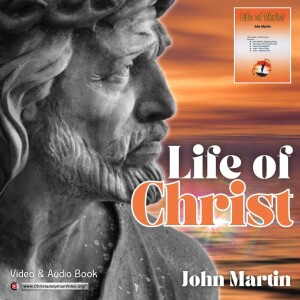
A @Christadelphians Video: In this **63-minute Bible talk**, John Martin explores **"The Children of Abraham"**—revealing the depth of God’s covenant, the true meaning of spiritual lineage, and how faith defines our place in His promises. A must-watch for those studying **The Life of Christ** or seeking a deeper grasp of Scripture! 🔔 **Receive notifications** for new Bible studies by subscribing and clicking the bell! **📌 Full Chapter Timestamps** 00:00 - Introduction 04:18 - The Abrahamic Covenant: Genesis 12 10:35 - Physical vs. Spiritual Descendants 18:50 - Jesus’ Teaching on True Heritage (John 8) 26:15 - Faith vs. Works: Paul’s Explanation (Romans 4) 34:40 - The Law’s Role in God’s Plan (Galatians 3) 42:10 - Hebrews 11: Abraham’s Model of Faith 50:25 - Modern Believers & Abraham’s Legacy 57:30 - Practical Applications for Today 63:00 - Conclusion **
📜 Bible Verses Covered (with Emojis)**
**Genesis 12:1-3** – God’s promise to Abraham
**John 8:31-39** – Jesus on true descent
**Romans 4:13-16** – Faith, not law, fulfills the promise
**Galatians 3:7-9** – Believers as Abraham’s children
**Hebrews 11:8-12** – Faith that pleases God **📂 Category** 🗝️ **Biblical Teaching**, ✞ **Christian Faith**, 📚 **Bible Study**, 🙏 **Spiritual Growth** **
🏷️ Tags** The Life of Christ, Children of Abraham, John Martin Bible Talk, Abrahamic Covenant, Faith and Salvation, Bible Study, New Testament Teaching, Spiritual Heritage, Christian Doctrine, Gospel Truth

Thursday Sep 04, 2025
Thursday Sep 04, 2025
2 Kings 10 tells of the fear from the rulers of Ahab's household of retaliation of Jehu upon the eunuchs who brought up Ahab's sons in Jezreel. Jehu tricks the eunuchs to kill Ahab's 70 sons in order to save their own lives. Jehu now conceives a plan to Jehu follows this by telling Jehonadab of his zeal to fulfill the word of Yahweh. Jehu next slays 42 of Ahaziah's relatives, before carrying out his great ruse to eliminate Baal worship in Israel. All of Baal's worshippers who were beguiled into believing that Jehu intends to become the greatest of Baal's worshippers. These deluded worshippers of Baal come into his house and are slaughtered to the very last person by Jehu's appointed executioners. Jehu was promoted by God and promised to have a dynasty of four generations because of the service done that he did for the Almighty. However, Jehu himself did it not out of zeal for God but for himself. Sadly, Jehu perpetuated the calf worship of Jeroboam 1st of Israel - the man who made Israel to sin. Ezekiel is the priest of Yahweh and is introduced to us in chapter 1. His name means 'El establishes'. He was a prophet among the Babylonian exiles in Chebar who had been taken to Babylon approximately BC 606. The prophecy opens with the wonderful vision of the four living creatures, or cherubim, these creatures are symbols of Yahweh's vehicle for accomplishing His purpose. The presentation put before us in chapter 1 is a mathematical impossibility. But this is not so in the divine scheme of things. The theme of the cherubim permeates Scripture from Genesis 3 to the book of Revelation. The eyes of the four-faced living creatures portray Yahweh's Omniscience - symbolised in the eyes within the wheels. 2nd Corinthians 5 outlines the Almighty’s Word, or His campaign for the reconciliation of the world. The Lord Jesus Christ's life, death and resurrection are its foundation and form the logical and heart-binding basis for our attachment to the great salvation of God. We become in Christ part of God’s new creation. The Apostle Paul urges his readers to take up this ministry of reconciliation as Christ's ambassadors. In chapter 6 the great Apostle outlines his faithful commitment to the task of preaching the saving gospel message. Paul also establishes that this work is a call which embraces each believer in becoming a child of our Sovereign king. On our part we must embrace a complete commitment to holiness as God's beloved children. In the seventh chapter Paul entreats the Corinthians to find a place in their hearts for those whose love for them was unquestionable; and to embrace wholeheartedly the great task of receiving back into fellowship the repentant brother who had been disciplined by the ecclesia in the hope of restoring the erring brother to the company of fellow believers - the saints in our Lord Jesus Christ. Verses 13-16 speak of Paul's joy at receiving the news from Titus that the ecclesia at Corinth had followed the Apostle's advice and through ecclesial discipline achieved the result that Paul had hoped.Thanks for joining us - we pray you found these comments helpful in your appreciation of God's words, join again tomorrow at https://christadelphianvideo.org/christadelphian-daily-readings/