The Bible Standard - Discover the Truth.
Christadelphians Talk about various subjects concerning True Bible Teaching.





Episodes
Apr 19, 2025
Apr 19, 2025
7 min
Deuteronomy 3 tells of two momentous events prior to Israel’s entry into the Promised Land. The first of these was the victory over the other great king on the eastern side of the River Jordan – the defeat of the giant king of Bashan, Og. Although we can tell how tall Og was the Scripture tells us that his bed was approximately 4.15 metres long, ie 13 foot 6 inches for those of my age. That makes him considerably taller than the Philistine giant Goliath, who was between 3 metres and 3.2 metres depending on the length of the cubit. So Israel conquers Og and his people and took possession of their territory in Bashan, which was a part of Gilead. The record tells us that Reuben and Gad occupied this land and its cities – which includes the region of Jair, one of the famous deliverers in the time of the Judges. The extent of the territory is described. The soldiers of the Reubenites and the Gadites were commanded to pass over and aid their brothers from the other 10 tribes in the conquest of the land to the west of the Jordan River. The event with the greatest impact on the nation was the LORD’s forbidding Moses from entering into the Promised Land. Verses 23-29 describe why his Sovereign forbad Moses’ entry. They tell of Moses’ plea to God and also Yahweh’s graciously allowing of Moses to see the land he had longed for; and for which he had carried and encouraged Israel for forty years; to guide them and ready them for their future inheritance. Moses will, of course, have an inheritance in the Land in the coming kingdom of our Lord Jesus Christ.
In Proverbs 30 we have the sixth section of the book. He was not Solomon who was the son of David. Agur says that he was the son of Jakeh. The Hebrew word for Agur means “the Gatherer”, ie one who collected wise sayings. There are 13 wise sayings, or proverbs, recorded in chapter 30. We cannot speculate on the identity of Agur; but we are told that in his era there were several other wise men – perhaps Agur was among those. When the book of Proverbs was finalised in the days of Ezra a selection of 13 of Agur’s proverbs were included. Chapter 30 centre around the theme of humility. Verses 1-4 tell of the grandeur and impossibility of searching out the depths of God’s Word. It is of the utmost importance that we understand and appreciate the significance of these first four verses. Agur speaks of the vital nature of divine revelation. The thoughts align with Moses’ words in Deuteronomy 30 verses 11-16; which the Apostle Paul explains in Romans 10:6-17. The words of verse 4 focus upon our Almighty God, Yahweh, and His incomparable Son our Lord Jesus Christ and they were the subject of David’s closing prayer recorded in Psalm 72 verses 17-20. Verses 5-6 are equally important as the Scriptures tell us that the LORD has magnified His Word above His Name. Every Word from God is pure. And it strengthens and protects those who honour it through seeking to understand our Sovereign’s Word and exhibit it daily in their lives. Be careful in the wise and proper explanation of that Word. Do not seek to add to it, nor take away from its saving truth – see Revelation 1 verse 3; 22 verses 18-19. Verses 7-9 provide the formula for a contented andGod-centred life. Satisfaction with sufficient and the abhorring of covetousness. The Apostle Paul offers the same counsel in1 Timothy 6:6-10. Verse 10 tells us to be fair and gracious in our speech – cp Ephesians 4 verses 25, 29. By way of contrast verses 11-14 focus on a proud and selfish generation through the poem Agur gives. These words in concert with the foregoing provide us with the opportunity for self examination. Verses 15-17 are another poem telling of the insatiable appetite of a leech; of a barren women; of a parched earth; and of the grave. By finishing with Sheol (the pit, the grave) we are being warned that a failure to heed God’s Word and to obey Him will see us hopelessly and forever entombed there. Verses 18-20 tell us about four marvellous and baffling things; and a contrasting fifth imponderable is added in harmony with the two women of the book – wisdom and folly – the Godly companion and the self interested and destructive harlot. The four marvels are how does an eagle fly; how does a snake slither across a rock; how does move without a trace through the sea; and love, who can explain that. Verses 20-23 speak in a sonnet of four disturbing and unbearable behaviours – an oppressive slave when he rises to become a ruler; a fool who is happy with himself/herself; an unloved woman in a disastrous marriage; and a maidservant who steals her master’s affection from his wife (compare Hagar and Sarah). Verses 24-28 tell of four tiny, yet powerful creatures, which are proactive and accomplish great things by acting together – the ants; the rock badgers; the locusts; and the house lizards. Verses 29-31 a poem extolling the grandeur of four created beasts – the majestic lion; the strutting cock, or rooster; the male goat; and a powerful king leading his army. Verses 32-33 the closing advice to control your anger and avoid the otherwise disastrous consequences.
In John 13 we have Jesus’ demonstration to his disciples of love, when he girds himself with a towel in the form of a servant (Philippians 2) and washes their feet. When Jesus came to Peter he was told you’re not going to wash my feet. He was told unless I wash your feet you can have no part with me. Peter’s response was, “Wash all of me”. Jesus said that the believers need only their feet be washed. Jesus had given the great example of loving service; and that from the one who was their Lord and Master. We must follow that exemplary service. Our Lord spoke of his betrayal and after given the sop – a sign of friendship – to Judas the betrayer left intent on completing the deliverance of his Lord into the hands of Christ’s enemies. When Judas left Jesus’ response was, “Just now was the Son of Man glorified”. He told the disciples of a new commandment, which was not entirely new, but certainly it was to the extent our Lord demonstrated in the laying down of his life revealed ‘agape’ to an extent never been seen before. Peter’s threefold denial was prophesied. In chapter 14 we are told that Jesus is, “the way, the truth and the life” and that no one can come to the Father but through the Lord. Philip said, “Show us the Father and that will be enough. Jesus response was “Haven’t you been with me long enough to have seen the Father’s character revealed?” Jesus promised the Holy Spirit as their Comforter, when he was to be taken from them. They would be left with peace – not the absence of strife, but the understanding that all things are in the Father’s control. So they left the upper room for further instruction.
Apr 19, 2025
Apr 19, 2025
3 min
Deuteronomy 2 speaks of the last days of the wilderness wanderings. Israel had reached the territory of Edom – the name assigned to the land of Esau, the elder of twins, the younger brother being Israel (or Jacob). There was hatred between the brothers throughout their lives and their descendants continued the hostility as the prophecies of Obadiah and Malachi reveal. Edom massed their army and came out to fight against their brothers. This happened even though Israel only requested safe passage and stated that they would pay for all food and water as they journeyed. So verse 8 records that Israel turns north to the land of Moab. Once again the nation of Israel was told not to pick a fight with the Moabites as their land had been given them by God. The Moabites had gained their territory by dispossessing the giants that had previously occupied that land. So 38 years after first arriving at that location Israeli crossed the brook Zered. A journey that should have taken 17 days, had the nation been faithful, had now occupied 38 years. The remainder of Deuteronomy 2 speaks of the LORD being with His people and giving them the victory over Sihon the king of the Amorites, who was himself a giant have descended from the Rephaim – those people in the Promised Land that had instilled fear into the 10 faithless spies; and as a result of that the entire nation became terrified and would not enter the land. Israel had requested the right to traverse through Sihon’s territory under the same terms that Israel had offered to Edom and Moab. Sihon mustered his army against Israel and was humiliated by the defeat that God brought upon those people. So Israel took possession of the land of Gilead.
Proverbs 29 deals with faithful work, as opposed to those who are careless and shoddy in what they do. The chapter begins with the need for humility and the results that this brings. It contrasts with those who scoff at the ways of the LORD and the problems that arise from such folly. The fool rushes heedlessly into foolish and destructive ways. The wise ruler heeds divine instruction and ensures its application within his realm. Discipline is essential for success in life; and when we grow older parental discipline needs to be replaced by self control and heeding the wisdom of our Father’s Word. Verse 18 informs us that without the guidance of the Almighty a nation becomes unrestrained in its behaviour. The literal Hebrew words for this is identical to the lascivious behaviour of Israel in the incident of the golden calf – literally “a people is made naked”. Our Sovereign has revealed to His children, through His Word, what is now happening in our world and the future He will bring. Surely this understanding will moderate the behaviour of His children as they live in an unheeding world. Let us learn to live justly in this present evil age – see Titus 2 verses 11-14.
In John 12 Mary anoints Jesus’ feet with precious ointment and because of that the odour fills the house. This waste of precious ointment becomes the catalyst for Judas going to the high priest and seeking opportunity to betray the Lord. Judas was the treasurer and a thief. There follows a plot to kill Lazarus and the chapter describes Jesus triumphant entry into Jerusalem. Philip brings some Greeks to see Jesus – this greatly encourages our Lord. Christ speaks of his being lifted up to glorify God in his crucifixion. Isaiah prophesied that in chapter 6 and this was to be the great stumbling block for the Jews to believe that Messiah could be crucified: 1 Corinthians 1:23. Our Lord had come into the world to save believers, whom he would raise up at the Last Day.
https://christadelphianvideo.org/thoughts-on-the-readings-for-april-19th-deuteronomy-2-proverbs-29-john-12/
Apr 18, 2025
Apr 18, 2025
1 hr 3 min
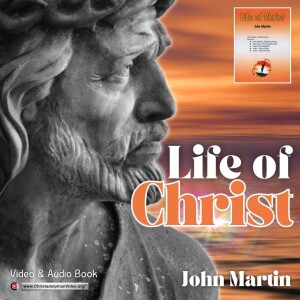
The Life Of Christ # 80 Feeding the 4,000 in decapolis ( Mark 8:1-9) by John Martin
Apr 17, 2025
Apr 17, 2025
4 min
While beyond Jordan Jesus is informed that his friend Lazarus is gravely ill and the messengers request that Jesus come immediately. But verse 4 says that our Lord’s response is to declare that this sickness of Lazarus is not unto death; but that Jesus might be glorified. After two days delay our Lord goes to his friends. Christ tells his disciples not to stumble; but to walk in the light, as long as the Light ie our Lord is with them. Jesus now plainly says that Lazarus is dead. This information probably raising more questions for his disciples than answers. When our Lord arrives note Martha’s unshakable conviction that Jesus is the resurrection and the life and any one believing in him would be raised up at the Last Day. Mary, however, had had her confidence in her Lord undermined by the Jewish rulers – called throughout John’s account “the Jews”. This caused Jesus to weep. The whole scenario was an out-working of the prophecy of Jeremiah 13 verses 15-17, which verses are cited three times by our Lord in John 11 verses 4-10. To show that Lazarus is one of the Lord’s sheep when our Lord’s voice of command is spoken with authority Lazarus came forth alive. Lazarus walked out in his grave clothes indicating that this was not the resurrection of the last day that Martha had spoken of. How infuriating to the authorities that Jesus had raised Lazarus. Did they respond to this miracle in belief – no? They immediately sought the death of Lazarus death and schemed Jesus’ own destruction. Caiaphas takes the lead in these matters. The Lord had predicted these events in his parable in Luke 16.
Apr 16, 2025
Apr 16, 2025
3 min
In John 9 we have the 6th sign in the healing of the blind man. The discussion in this chapter is similar to the pattern established in chapter 5. Both the blind man and his parents are persecuted by the rulers for accepting Jesus. The formerly blind man gives a remarkable and compelling testimony that Jesus must be from God. The religious leaders spitefully cast out the man who has dumbfounded them with scriptural logic. Our Lord later finds this man in the temple so as to complete his restoration. These events most likely happened at the feast of the Dedication. John 10 is the magnificent account of Jesus being the door and the Good Shepherd. Christ had come that believers might have life and have it more abundantly verses 10-11. Our Lord by laying down his life for his sheep secured for believers that wonderful hope of eternal life in the kingdom of God. Once again the theme of chapter 10 is a repeat and elaboration of chapter 5 ie that his sheep will recognise his voice. In the purpose of bringing salvation to believers he and his Father are one ie united – but our Lord’s power is derived from his Father. The Jews reacted to our Lord’s words and by claiming that he was speaking blasphemy. Jesus proves from Psalm 82 that the judges of Israel were called “god” as they spoke God’s Word. The chapter finishes with Jesus going across the Jordan for some months – in Perea – where he remains until the events of chapter 11 would bring him back.
Apr 15, 2025
Apr 15, 2025
4 min
Some versions of John 8 omits the earlier verses. There can be little doubt that they should be included in the record. A woman was brought to the Lord caught in the very act of adultery. Where was the man? It was a set up designed to trap Jesus. The Law of Moses made it very clear that adultery was punishable by stoning. As they persist in goading Jesus he said, “Let the one without sin cast the first stone”. And he stoops down and writes on the earth- most likely he wrote their names in fulfilment of Jeremiah 17 verse 13. One by one they left beginning at the eldest. Finally, the woman was left alone with the Lord and although he condemned her not, she was told to go and sin no more. A discussion follows about Jesus being the light of the world- one of the many Messianic titles that John used. This led on to a discussion regarding origins – our Lord was from God they were murderous liars and in no way children of Abraham. Only truth could set them free. Finally Jesus astounds them with a claim for him to be the entire focus of God’s purpose. Abraham understood this and rejoiced in that knowledge.
Apr 14, 2025
Apr 14, 2025
3 min
John 7 records an unannounced visit of Jesus to Jerusalem at the Feast of Booths ie Tabernacles. There was a division among the people, as to whether our Lord was a good man, or a deceiver of the people. Jesus arrives in the middle of the feast. Many were convinced that he was the Christ. Although officers from the Sanhedrin were sent to arrest Jesus they could not do so because his time had not yet come. Jesus prophesied to them of his ascent to heaven and the giving of the Holy Spirit. Some said that this was the prophet like Moses. Others rejected this idea just because our Lord was from Galilee. Jesus just like Jonah, also from Gath-Hepher in Galilee told his audience to consider the sign of the prophet Jonah. We have seen in our earlier studies that the sign had many levels of significance, but chiefly spoke of Jesus’ resurrection.
Apr 13, 2025
Apr 13, 2025
4 min
Numbers 33 tells of Israel’s journeys through the wilderness from the day they left Egypt until they pitched camp at the edge of the river across from Jericho, at Abel Beth-Shittim. It outlines the significant events, including wonderful miraculous displays by the Almighty; as well as several troubling happenings when the nation failed to show trust in the Living God. As the writer to the Hebrews said, “We cannot now speak particularly”. Nevertheless I would urge your reflections on the importance of these stops. They were ‘watersheds’ in Israel’s journey to the Promised Land. Paul tells us in 1 Corinthians 10:1-13. Slowly read these verses aloud and think upon the messages for you. The chapter concludes with a charge to drive out the Canaanites from the Promised Land and the receipt of their inheritance through the casting of lots.
Proverbs 24 verses 1-32 concludes the 30 proverbs recorded in chapters 22-24. Verses 1-2 tells of the folly of envy. The rich and powerful frequently bring troubles. Verses 3-7 outline the blessings that come from wise thinking and wise actions. The metaphor of the house built by wisdom and the bounties which fill its rooms. By way of contrast verses 8-9 speak of the curses brought by the scorner. Verses 10-12 tell of the need for diligence and perseverance in order to achieve success. Verses 13-14 tells of seeking divine wisdom in contrast to being wise in one’s own conceits. Verses 15-16 shows that the evil plot the downfall of the just; but the righteous cannot be overthrown because Yahweh upholds them. Verses 17-20 speaks of keeping things in perspective. This means seeking the good of everyone – even one’s foes. Remember the righteous have a future. This is not the way for the evil who will be eradicated from the earth. Verses 21-22 says that the framing of one’s life is based on a reverence for the Almighty. Verses 23-34 give further sayings of the wise. Verses 23-26 outlines the need for honesty in dealing with others; and the need for nothing to be done by partiality. Verses 27-29 speak of truthfulness and fair dealing with others. Verses 30-34 tells of the results of slothfulness and how the lazy are reduced to poverty.
John 6 records signs 4 and 5 – the feeding of the 5,000 and our Lord’s walking on the troubled sea. The feeding of the 5,000 took place in spring – a time of abundant green grass. It was Passover time (12 months before Jesus’ crucifixion) and just after the death of John the Baptist. Jesus, in testing Philip, asks where can Jesus and his Apostles purchase sufficient bread in the wilderness for this crowd; for our Lord already knew what he was going to do. From the personal lunch of a lad – five loaves and two fish Jesus feeds 5,000 and collects 12 baskets full of fragments. Having full bellies the multitude wants to forcibly make Jesus their king. Our Lord rapidly disperses the crowd and sends the disciples away by boat. Jesus goes into a mountain to pray. The Lord comes to the disciples walking on the water. No sooner had he joined them than they arrive at Capernaum – the city of comfort. This is a parable illustrating our vain toiling on the troubled sea of nations as we await the return of our Master. As soon as Jesus returns we will receive the peace he brings and the comforts of the kingdom age. At the synagogue in Capernaum a discussion takes place as Jesus tells them that he is the ‘bread of life’ – in contrast to the wilderness manna eaten by their fathers. The Son of God has been sealed in his thinking by his Father; and what they need to do was believe. Their being saved is through what the Father has done through His Son and all they can do is to accept this by believing on His Son. Isaiah 55 is a key link to this chapter and it focused on resurrection – “the sure mercies, ie chesed, to David”. Note the emphasis in John 6 and how many times Jesus refers to resurrection – verses 39, 44. Verse 45 quotes from Isaiah 54 verse 13. All who believe the faithful message of the gospel are “taught of God”. Jesus found that many would-be disciples leave him being unable to cope with the challenging ideas our Lord Jesus presents. Peter brings great comfort to our Lord and encouragement for every potential disciple by saying in verses 68-69, “Lord, to whom shall we go? You have the words of eternal life, and we have believed and come to know, that you are the Holy One of God”. ESV
Apr 11, 2025
Apr 11, 2025
1 hr 6 min
The Life Of Christ # 79 The healing of the deaf man at Decapolis (Mark 7:31-end) by John Martin
Apr 11, 2025
Apr 11, 2025
3 min
John 4 deals with the incident between Jesus and the woman of Samaria in which he offers her “living water”. There follows a discussion between Jesus and the woman about the site of acceptable worship – Jerusalem, or Gerazim. Jesus firstly tells her that salvation is from the Jews. Acceptance of God is dependent on two factors sincerity and truth – these have always been the focus at Shechem (Joshua 14 verses 14-15; Judges 9 verses 14-15). The woman accepts Jesus as the Christ (Messiah) and she then has an incredible impact on helping the Samaritans to receive Jesus also. Philip would about 7 years later reap the gathering harvest now being down. That harvest is spoken about in Acts 8. From verse 46 to the end of John chapter 4 our Lord Jesus heals the son of an official from Capernaum – this being the second of the signs recorded by John and resuting in the official and that Nobleman – thought by some to be Herod’s keeper of the larder Chuza – and his entire household becoming believers in our Lord.