The Bible Standard - Discover the Truth.
Christadelphians Talk about various subjects concerning True Bible Teaching.





Episodes
Mar 14, 2025
Mar 14, 2025
1hr 7 min
The Life Of Christ # 75 The Bread of Life (John 6: 22-47) by John Martin
Mar 14, 2025
Mar 14, 2025
4 min
Leviticus 22 completes the description for the requirements of the priests. Verses 1-9 tell of the processes for the priests to reverently eat of the holy things associated with the offerings. Verses 10-13 spoke of those holy things which the families of the priests were allowed to eat. Verses 14-16 describes the need for a trespass offering to be made if a person ate of the holy things unintentionally. Verses 17 to 20 outlines the need for a perfect animal to be presented as a burnt offering. Note Malachi’s rebuke to those who offered a blemished animal – Malachi 1 verses 8-9. Verses 21-25 tell of matters associated with the peace offering. As this offering spoke of fellowship with the LORD it was essential that the animal offered was physically perfect. Verses 26-28 tell about the age requirement for an animal to be offered. Verses 29-33 repeats the holiness required to be shown by the offerer and that the provider of the sacrifice was to be truly thankful when offering to their God.
Psalm 125 describes the surrounding strength and enveloping protective arms of the LORD around His people and city of Jerusalem. The understanding of this coupled with the trust of the faithful sustained the city’s residents during the Assyrian siege. And for that trust the Almighty delivered them and brought to them that seemingly impossible peace.Psalm 126 tells of the restoration of Jerusalem and those who experienced the deliverance felt that it was so unbelievable that it was just like a dream. Their terror was turned to joy and laughter. The saved inhabitants sought opportunity to praise and extol their great and glorious God. They had sown scarce and precious seed in tears, but Yahweh had blessed His people Israel so that they would reap an abundant harvest.Psalm 127 reveals the secret for peace and blessings from our Sovereign. Jerusalem’s watchmen we’re wary and terrified. The city’s defences were useless without the Yahweh’s oversight of and care for His people. Anxiety is removed by taking all our cares and concerns to our Father in prayer – Philippians 4:5-7. Slavery or death seemed inevitable to the Jerusalem’s residents, but God would bless the faithful with sons and daughters. Faithful sons are like true arrows which will be directed into the hearts of the Father’s enemies. I’m sure many faithful believers have felt the encouragement when our families become actively involved in the service of the Almighty as Paul reminds us in 1 Corinthians 15 verse 58.
Luke records in his 5th chapter the call of fishermen to become Jesus’ Apostles. Peter, Andrew, James and John were mending their nets, but they are miraculously given an incredible catch when they obey our Lord. Their job from now on was to catch men for the Gospel. We too are charged to catch men and women for the kingdom: Mark 16:15-16. The chapter records the next miracle as the curing of a leper, who totally believes In Jesus’ power to make him “whole”. The leper’s only question was would the Lord be willing. The cleansed leper is sent to the priests as a testimony that our Lord Jesus Christ is sent from God. Crowds gather to Jesus and are healed. The power of God was ever present to heal those with responsive hearts. Luke speaks of the faith of a paralytic man and his four friends, who against all odds find a way for faith to save their paralysed friend. This healing provokes indignation from the religious authorities. Jesus had designed this to demonstrate the link between Christ’s miracles and him being the Son of God (called in Luke’s record “the Son of Man”). Then we read of the call of Levi, or Matthew, who is a hated collector of excise. We read of a dispute arising among the Apostles about fasting. Jesus tells his Apostles that the reason his disciples did not fast was because the bridegroom was with them. Christ says that when the Bridegroom is taken away then they would fast. Lastly the Lord gives two parables about why Jesus’ teaching was not palatable to the inflexible Jewish religious leaders. The enemies of our Lord were set in tradition and were incapable of receiving Jesus’ saving message. Let us make sure that we have hearing ears.
Mar 13, 2025
Mar 13, 2025
4 min
Leviticus chapters 21,22 describe laws in relation to the Priesthood. Verses 1,6 tell us that the High Priest, because he represents the LORD, was not to mourn the death of any friend (or relatives) except for his immediate family.Verses 7 and 8 tell us that the priests were limited in their choice of a marriage partner. Verse 9 spoke of the holiness that was needed amongst the priest’s family. Verses 10-12 teach us of the holiness to be observed by the High Priest. This was to be an example to Israel, the priestly nation (Exodus 19 verses 5-6). And to us also, as Peter explains in1 Peter 2verses 5 to10). AM Verses 13 to15 describe the holiness of the High Priest, with regard to the sanctity of marriage. Since the Levitical priests were Yahweh’s ministers and representatives there was the requirement of physical perfection (verses 16 to 24.
Psalms 120 to134 were placed by Hezekiah into the Psalms as a group and referred to as,“The Songs of Degrees”. They celebrate the 15 years extension of life granted to king Hezekiah by his Sovereign, after his recovery from leprosy.Psalm 120 is described as a Psalm of ascents in celebration of deliverance. King Hezekiah was sick unto death and his city of Jerusalem surrounded by a massive Assyrian army. Both dilemmas were unsolvable, yet Yahweh granted salvation for King Hezekiah, as an individual, and to the entire nation. The blasphemy of the treacherous Rabshakeh is spoken of in v3.Psalm 121 tells us that Jerusalem’s safety came not from any foreign army, but rather from the Almighty Maker of heaven and earth.Psalm 122 is a Psalm of joy and thanksgiving following Hezekiah’s miraculous healing and the deliverance of his people. With great joy the king led the people to the Temple where they worshipped with praise and thankfulness.Psalm 123 speaks of the diligence with which the faithful looked to Yahweh their Master, who saved them from destruction.Psalm 124 recounts the impossible situation of Israel. And yet the might of the universe, the Creator of heaven and earth exercised His awesome power in saving them.
In Luke 4 we have the account of Jesus in his home town of Nazareth. Before this we read of our Lord Jesus Christ returning triumphant from his three-fold temptation in the Judean wilderness. Jesus was, as Hebrews 4:15 tells us, tempted in all points as we are BUT without sin. These three points of temptation are: 1) the lust of the flesh; 2) the lust of the eyes; and, 3) the pride of life (see 1 John 2 verses 15 to 17). But our Lord overcame by the Word of God (Revelation 19 verses 11to16). All of Jesus’ rebuttals of his temptation come from the book of Deuteronomy chapters 6 and 8. Verse 14 tells us that Christ’s ministry begins in the power of the spirit of God. To Galilee Jesus goes to fulfil the prophecy of Isaiah 9 verses 1 to 7. On the Sabbath day in Nazareth Christ begins to preach starting with Isaiah 61 and reading the first one and a half verses; finishing with the words “to preach the acceptable year of the LORD”. Then our Lord closed the scroll and sat with his announcement that those words were fulfilled that day. On being invited to speak he tells them that they will not accept Jesus. Just as he had been rejected in Capernaum (his adopted home). Jesus says that since no prophet has ever been accepted among his own people. For that reason, our Lord declares, Elijah’s and Elisha’s missions were with those Gentiles to whom those prophets were sent by God. The citizens of Nazareth then attempt to kill Jesus intending to cast him from the Precipice. But Jesus uses the power of the spirit to pass safely through their midst. It was just as he reveals in John 7 verse 34, “where I am you cannot come”. In the synagogue Jesus cures a man with a sick mind. Next, whilst our Lord, is in Capernaum he cures Simon Peter’s mother-in-law. Many other cures follow and our Lord’s preaching continues throughout Galilee. If we follow Luke’s account other than the few events recorded at the beginning, and the time of his crucifixion, we would think that Jesus didn’t go to Judea. The reason for this was, largely, Christ’s acceptance in Galilee and his rejection in Judea.
Mar 11, 2025
Mar 11, 2025
4 min
Leviticus 20 speaks of penalties for depraved practices. I will quote brother Martin’s book, page 220 –“Leviticus 20 takes up the heathen practices condemned in chapter 18, and attaches the penalties to be applied for those guilty of such depravities. It is curious that chapter 20 does not immediately follow chapter 18. One suggestion is that chapter 19, with its “royal law”, comes between to demonstrate “the more excitement way” to avoid such unholy behaviour.”The abominable practices with exhortations to avoid them. Verses 1-5 offering children unto MolechVerses 6, 27 people with familiar spirits and wizardsVerses 7-8 exhortation to manifest God’s holinessVerse 9 dishonouring parentsVerse 10 adulteryVerse 11 affair with father’s wifeVerse 12 affair withdaughter-in-lawVerse 13 homosexualityVerse 14 bigamy within the same familyVerse 15 sexual depravity with animals (Men)Verse 16 sexual depravity with animals (Women)Verse 17 incestVerse 18 intimacy during menstrual periodVerses 19-21 illicit relations with close relativesVerses 22-24 exhortations to reject practices of the Canaanites
We conclude our comments on Psalm 119. And we must remember that this was written principally for the Messiah – our Lord Jesus Christ(Romans 15 verses 4-5). It was written for his sake and to guide him, in the first place. We see his mind, his attitudes in every verse. We follow him who was the Lamb of God, being led by his Father (the Great Shepherd of Israel Psalm 80). Stanzas 17-22 and alphabet letters 17-22 are provided for our contemplation. Just a few verses for us to slowly read aloud; and pause and ponder – verses 129-132verses 137-140Verse 142; verses 145-149Verses 159-160verses 163-166 andVerses 174-176. Reflect upon these and think about the incomparable Christ Jesus. Try to apply these principles in your own life. Verse 176 is curious and some have said that it is not Messianic. But it tells us Messiah’s mind. He is teaching us that without the guiding Word of His Father he too would have failed to walk the path chosen for him.
Luke 3 begins with all the supposed somebodies of the age. To none of them does Yahweh reveal Himself but to a nobody in the wilderness. Yet what a message was the LORD’s word. It declares the insignificance of human flesh. By contrast it announces that the transforming power inherent in God’s Word to cause weak, frail and dependent humans to acknowledgment their sinfulness by repenting and aligning themselves in baptism with the forgiveness offered to them on that condition. John’s message came from Isaiah 40 verses1-8, see Peter’s comments in 1 Peter 1 verses 17-25. All those who were considered as the baser classes of society responded to the message of John the Baptist. The self important stood self condemned by their rejection of God’s offer. Jesus, likewise, acknowledges that there is nothing in human nature worthy of perpetuating. Our Lord, would through his perfect life, submit in obedience to death; and being raised to immortality and by this he would declare God’s righteousness. So Jesus submits to baptism and asks the same of all disciples. Our Lord Jesus’ genealogy is provided back to Adam, and hence to God also. He is not only Son of Man through his mother whose genealogy is here given through Nathan, David’s son – but just as vital Jesus is the Son of God. And it is for this reason our Lord was enabled to overcome sin: see Hebrews 1.
Mar 10, 2025
Mar 10, 2025
4 min
Leviticus 19 can be summarised in one verse. Verse 19 of this chapter says, “You shall love your neighbour as yourself”. This is sometimes called the golden rule – stated another way it could be said, “Do unto others as you would have them do unto you”. In the New Testament Jesus highlighted this teaching in Matthew 22:36-40. Paul explains it in Romans 1:8-10; and James describes it as the royal law in James 2:8-13. Every command in Leviticus 19 is designed for the protection of the weak and the benefit of the entire nation. Everyone who lived by these principles would fulfil each of the Ten Commandments from the sixth to the tenth commandment. You would not bare false witness if you loved your neighbour; nor would you steal or kill. Therefore love is the fulfilment of the law – its crowning pinnacle.
Verses 81-128 of Psalm 119 cover stanzas 11-16 and therefore also the letters from the Hebrew alphabet of 11-16. The Psalmist, as we have said, was prophetically revealing to us the mind and motivations of the Messiah – our Lord Jesus Christ. What should be apparent to us is his positive attitude. His thoughts were always directed towards pleasing his Father. We must learn to live life from the standpoint of counting every blessing day by day. Whenever we feel negative thoughts pressing upon us, then stop and affirm to ourselves that God loves and cares for us. His Son told us, “Fear not little flock, it is your Father’s good pleasure to give you the kingdom”. Let us take a few verses for our encouragement and being built up in our most holy faith – verses 89-94; verse 90; verses 97-100; verses 103-105 and verses 125-128. Slowly read these aloud and think deeply on their significance to you.
In Luke 2 we have the record of the birth of the Lord Jesus Christ. The whole world was turned upside down by the decree of Caesar Augustus that there must be a census. This required vast movements of people to their ancestral homes. Joseph and his heavily pregnant wife, Mary, are caused to go to Bethlehem. When there was no room in the inn (Chimham’s lodging house from the time of king David) they found lodging among the cattle. In such humble circumstances the king of the world is born. A multitude of angels appear to the Bethlehem shepherds, who were watching over the lambs which were to be sacrificed at the next Passover. The message of the angels was that when God is glorified in the earth then there would be peace among men of good will. We then find the record of Jesus being taken to the temple for the required offerings. Mary’s offerings were for those of the poorest. We are told of the faithful Anna and Simeon who were in expectation of Messiah’s redemption of the nation. Jesus is taken by Joseph and Mary to Egypt in order to escape Herod the Great’s slaughter of the babes of Bethlehem (this is recorded in Matthew 2). Luke takes up the story after Herod’s death, when they were returned from Egypt and their moving to Nazareth in Galilee. Here Jesus remains until the age of twelve when he went with his parents to the temple in Jerusalem. Jesus became “lost” when the family was returning to Galilee. When the family came to Jerusalem seeking for Jesus they found him in the temple discussing the Law with the doctors of the Law. What child was this? The record tells us that as well as hearing these learned men Jesus was also asking questions of them. Our Lord gave the rejoinder to Joseph, his step father and Mary – where else did you think I would be? It is my Father’s business that motivates me. Mary kept these matters in her heart and often pondered them. On returning to Nazareth he took the appropriate role of an obedient child. Jesus’ wisdom increased rapidly, as did the pleasure of His Father in His wonderful Son. People found him amiable and agreeable in every capacity.
Mar 9, 2025
Mar 9, 2025
5 min
Leviticus 17 describes the significance of the blood in the sacrificial laws. We have already noted that Hebrews 9 verse 22 tells us that forgiveness of sins required the shedding of blood. Not that physical blood has any atoning qualities. It was symbolic of life. All life belongs to God. The blood upon the altar was from a flawless animal. And that spoke of the voluntary offering of our Lord Jesus Christ – who was morally perfect (the offering of the life of the only sinless man). And through that offering we have redemption in his blood(Ephesians 1 verse 7). Verses 1-9 tell us that there was no animal sacrifice made during the wilderness journey. Verses 10-12 speak of the positive aspects of the sacrificial blood. These verses reinforce that the LORD owns all life. And the acceptance of the sanctity of life was to be observed by the Israelites on pain of death for violating this (Genesis 9 verses 3-6). Verses 13-16 refer to the negative significance of the blood. All manner of ceremonially clean animals could be eaten. But the blood was not to be eaten. It was to be poured onto the earth; or in the case of an offering upon the altar (earlier chapters in the sacrificial code in Leviticus talk of this). The killing of an animal still rendered the hunter “impure”.Leviticus chapters 18-20 tell of moral laws for the LORD’s people. We have already seen how the Ten Commandments were founded on the basis that Yahweh was their God; and that He had brought them out of Egypt from the house of slavery. The same moral foundation underpins the moral code of the Israelites – Leviticus 18 verses 1, 30, 19 versess 2-3, 18. That verse in Leviticus 19:18, “Thou shall love thy neighbour as thyself” is the second of the two great commandments (see Matthew 22 verses 36-40). The second and third pillars for the observing of a holy life were: don’t behave as the Egyptians did; nor be like the Canaanites; whom, says the Almighty, will be vomited out of the land because of their perversions. Verses 1-5 through of Leviticus 18 give us our Sovereign’s moral reasons for the following commandments. Verses 6-23 forbid the practice of any of the sexual perversions described. Verses 24-30 tell us that Yahweh’s covenant people must live lives that are upright and distinctly different from the inhabitants of Canaan.
Stanzas 6-10 of Psalm 119 cover the Hebrew letters 6-10. These are contained in verses 41-80. This form of poetry is referred to as an acrostic. Just a few verses from these segments for us to meditate on. Slowly read aloudverses 41-44, verses 49-50, verses 57-59, verses 66-68, and verse 72. Meditate on the way in which these verses may direct the course of your life- just as they were the motivating force of our Lord Jesus Christ the Saviour of the world.
In Luke 1 the beloved doctor (not an Apostle) gives his account. Luke sets out in order of happening of events in the life of our Lord Jesus Christ. The written account is to Theophilus – a name meaning ‘a lover of God’. Some have suggested that Theophilus was a high ranking Roman official. Whether this is true or not, the book is addressed to us, as lovers of God. Verses 5-18 tell of Zacharias, the priest and his temple service. Those verses also inform us that the aged priest and barren wife, Elizabeth, had no children. The angel Gabriel appears to Zacharias and foretells him of the birth and mission of John the Baptist – the son that was to be miraculously born to this old man and his barren wife. Because Zacharias doubted the angel’s words he was struck dumb till the day of John’s birth. Note John’s mission was said to be the fulfilment of Malachi 4:5-6. The angel Gabriel was next sent to the wonderful Mary. This faithful young woman had been chosen by Yahweh to be the mother of His Son. This birth too was to be brought about by an even greater miracle. Read the angel’s words aloud in verses 30-33 – ponder the import. Mary accepts the message and as the handmaid of the LORD she says that she will humbly comply. Mary’s cousin Elizabeth, who was herself 6 months pregnant, is visited by Mary and together these two faithful women praise and exalt God; and spiritually encourage each other. Mary’s song of praise giving is recorded in verses 46-55. Compare Mary’s song and words of rejoicing with Hannah’s song told to us in 1 Samuel 2 verses 1-10. John is born and named. Then his father Zacharias’ tongue is loosed. Consider his remarkable prophecy of the work of the two greatest men ever born. The record brings together a significant number of Old Testament scriptures. Read these words in verses 68-79 and ponder the greatest epoch that was to emerge in the ministries of these two servants of the Almighty in all time.
Mar 8, 2025
Mar 8, 2025
6 min
Leviticus 16 has often been described as, “What the Law could not do”. It deals with the Day of Atonement, or coverings – of sin.The sacrifices under the Law of Moses could never take away sin; nor could they cleanse the conscience of the offerer. The writer to the Hebrews particularly speaks of this in chapters 9-10 verses 9 verses 6-12, 23-28, and 10 verses1-22 are an exposition on the Day of Atonement. Read these verses and ponder their meaning. Now for the breakdown of this chapter which climaxes the section in Leviticus dealing with the laws of uncleanness. Verses 1-2 the entry into the Most Holy Place was limited to the High Priest on one day per year; and even only then under the strictest rules for preparation and approach. Verses 3-10 provide an outline of the entire ceremony. Verses 11-17 tell of the requirements of the High Priest whose entry into the Most Holy Place was with the blood of sacrifice – Hebrews 9:22. But also was the symbol of the live goat (symbolically resurrected), which bore away the sins of nation – indeed for each individual. Isaiah spoke of this in chapter 53 verses 4-12. Verses 18-19 tell of the purification of the altar in the outer court. Verses 20-22 describe the sending away of the scape goat (called in the Hebrew Yahweh’s goat – for this goat spake of the baring away of sins cp. John 1 verse 29). Verses 23-26 tell of the changing of clothes by the High Priest before entering the Most Holy Place. Aaron put on a plain linen tunic indicating the single requirement for drawing near to the Almighty was holiness. Our ability to draw near to our Father is because of the sinless offering of himself by our Lord Jesus Christ. Verses 27-28 speak of the destruction of the body of the sin offering outside the camp – Hebrews 13 verse 10-16. Verses 29-31 tell of the need for devotion and of the humbling of those seeking for the forgiveness ie covering, of their sins. Verses 32-34 tell about the duties of the man selected to be the next High Priest in relation to the disposal of the ashes.
Psalm 119 is known as the longest “chapter” in the Bible – 176 verses. The Psalm is principally about the mindset and behaviour of the Messiah – our Lord Jesus Christ. The poem is a summary of what the Ten Commandments were trying to teach every Israelite; but in reality were only true in the lived out life of the Christ. The Greek translation of the Old Testament, called the Septuagint (LXX), spoke of the commandments as the“ten words” (Decalogue). The poem consists of 22 stanzas each of 8 verses. Each verse in each stanza commences with the same letter of the Hebrew alphabet. Verses 1-8, for example, each start with Aleph, which in the Hebrew lettering looks like an ox. Verses 9-16 each start with Beth, the second of the alphabetical letters. Whereas Aleph tells of the faithful ox, Beth speaks of the house in which the ox serves. And so the story proceeds through each stanza. I can only give a brief overview here. For those wanting a more detailed explanation please consult “The Companion Bible” by Bullinger. There are frequent marginal notes plus an Appendix in the rear devoted entirely to this Psalm. There are ten Hebrew words used repeatedly throughout this Psalm. They occur in every verse with the exception of one – verse 122. The ten translated English words stand out plainly due to their repetition when read. They are the words – way, law, testimonies, ways, precepts, statutes, judgments, word, commandments and paths. The reader is encouraged to search out the meaning of each of these words and then to read the Psalm with greater understanding. Just a few verses for you to contemplate by way of meditation –verses 9-11 and verses 33-35. Read these now aloud slowly and ponder their power in Messiah; and for your life.
In 2 Corinthians 12 we are told about visions that the Apostle Paul had 14 years before the writing of his letter. The “visions” were so real that Paul was unsure as to whether he was actually there, or it was just a dream-like revelation. The experience empowered him to deal with his severe trials, for which he earnestly beseeched God three times in prayer to remove. Each time he receives from the Father the same answer – “My grace is sufficient for you, for My power is made perfect in weakness”. If only we could all learn that lesson. He speaks of his intent to see them; and this had twice been thwarted. What the Apostle’s thorn in the flesh was we do not exactly know. What we know is his eyesight was badly affected to the extent that Paul used a scribe to write his letters. His autograph at the end of each letter was in large hand written characters: Galatians 6:11. Additionally Paul had sent Titus as his representative as that brother closely knew the Apostle’s mind on the matters the epistle discusses. Titus also had a great love for the Corinthians. Chapter 13 concludes with final warnings and advice. The Apostle had attempted visiting the Corinthian ecclesia twice, but his plans had been thwarted. Verses 5-10 is a call for all of the believers in this city to reconsider their motives and actions. And to change these, if required, so that they might find a place in the kingdom of our Lord Jesus Christ at his coming. Verses 11-14 give Paul’s final greetings and his appeal for the members of the ecclesia to live in love and harmony.
Audio Player
Mar 8, 2025
Mar 8, 2025
5 min
Leviticus 15 speaks of issues arising from the flesh. Once again talking about the sin that arises from the conflict between that which is natural to us; and the developing mind which is striving for holiness before our Father (Romans 7 verses 15-8 verse11 consider carefully).Verses 1-15 talk of running issues in men – verses 1-12 the unclean issue and how it is transferred from one to another; verses 13-15 tell of the period of cleansing and the required offerings.Verses 16-18 address impurity in physical relationships between man and woman. Verses 19-30 outline running issues in women –verses 19-24 talks of normal menstruation and the measures to be followed in order to avoid the transferring of impurity and disease;verses 25-27 abnormal and prolonged menstruation (a woman with this problem was cured by our Lord Jesus Christ; see Mark 5 verses 24-34); verses 28-30 the period of purification and the necessary offerings. Verses 31-33 describe the reason for these laws about issues. Consider the importance the LORD places on these laws (v31).
In Psalm 117 we have the shortest “chapter” in the Bible. In Psalm 118 we have the middle “chapter” of the Scriptures. And in verse 22 of Psalm 118 we have the middle verse of the Bible. It of course centres on our Lord Jesus Christ for he is the central theme of the Scriptures. He is in every chapter; and without him there can be no Bible.
“THE STONE WHICH THE BUILDERS REJECTED HAS BECOME THE CORNERSTONE” (ESV).
Psalm 117 calls upon all nations to extol Yahweh for His everlasting kindness (“chesed”) and truth(Romans 11 verses 22-23). These will be the hallmarks of the Kingdom of our Lord Jesus Christ.Psalm 118 continues the theme of the LORD’s enduring stedfast kindness. It is a Messianic Psalm so often quoted in the New Testament. The saints must thank our Sovereign (Yahweh – the LORD) for His covenant love. From verses 5-21 is a pattern of prayer calling from out of the Psalmist’s (Jesus’) distress; alternating with praise and thankfulness for the writer’s deliverance. The trials surrounding our Lord’s crucifixion are described in verses 5-7, verses 10-13 and verses 17-18. The songs of thanksgiving are found in verses 8-9, verses 14-16 and verses 19-21. Note that Messiah says that his enemies would be destroyed in the name of Yahweh (compare Proverbs 18:10). The great work of the Almighty is the focus of the twenty second verse (Isaiah 8 verses 11-16, 28 verses 14-17; 1 Peter 2 verses 4-10). The three synoptic gospel accounts all quote verses 22-23 of Psalm 118, as applying to our Lord’s crucifixion. When our Lord Jesus rode into Jerusalem prior to his death the multitude cried out in the words of verse 25-26.Verses 27-28 tell us that’ like Isaac (Genesis 22), our Lord was bound – and yet he willingly submitted to the painful and humiliating appointed death. And so Messiah, the now glorious, but previously slain, Saviour praises his Almighty Father in a redeemed and immortalised body. “O give thanks to Yahweh, for He is good; for His stedfast love endures forever!” (Verse 29 ESV).
2 Corinthians 10 tells us that the battle for Christ’s soldiers is in the realm of their mind – a spiritual warfare designed to bring every thought into captivity to Christ. The great Apostle answers his critics who claim that he could cogently argue, but was a weak orator. Paul promises to sort these foes out when he comes to Corinth. Commendation from the tongue of humans is worthless. The Apostle’s approval would come from the Lord Jesus Christ.In chapter 11 Paul tells them that he loves and guards them from their enemies and would be deceivers. The Apostle says that he is as a true husband to the disciples who he has begotten in Christ: compare Galatians 4:19-20. Paul gives an analogy from Genesis 3 proving that the events of the temptation in Eden really happened. Then from verses 7-15 the Apostle sarcastically compares himself with the false teachers – the judaisers. Finally from the 16th verse to the chapter’s end he composes a catalogue of his sufferings in order to assert his credentials as a committed Apostle of Christ. Paul concludes the list with an account of an act earlier after his conversion of which he was ashamed. His seemingly fleeing from Damascus after having being let down the wall in a basket to escape.
Mar 7, 2025
Mar 7, 2025
1hr 3 min
The Life Of Christ - # 74 The feeding of the five thousand.( John 6 1-21) by John Martin
Mar 6, 2025
Mar 6, 2025
5 min
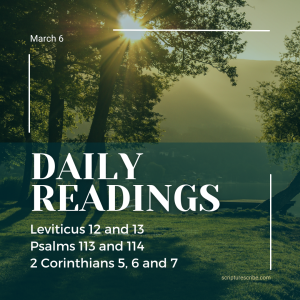
Leviticus 12 deals with the ceremonial uncleanness incurred through the process of birth. The second half of the chapter outlines the offerings required for purification. Verses 1-4 speak of the birth of a male; the actions to be taken; and the period of ceremonial uncleanness. Note that total period of ceremonial uncleanness for a male child is 40 days. Circumcision was to occur on the eighth days. This was followed by a period totalling 33 days of separation. Verse 5 tells the initial period of “defilement” (by this understand it is describing ceremonial impurity) for a female was 14 days – two cycles of 7. Followed by an additional time of 66 days. The question is why the term of impurity was doubled for the female? The difference, other than the time periods, was the act of circumcision. In every aspect of the Law we are being taught of Christ. He was circumcised on the eighth day (Luke 2 verses 21-24) at the Temple with the prescribed offerings for the poor. After this he lived for 33 years separated to his God; and struggling against his flesh, which struggle ended with his death on the stake(Colossians 2 verses 11-15). It was for us that Jesus volunteered to die on the tree; that through the cutting off the flesh we might be reconciled to God. Verses 6-8 of Leviticus 12 tell of the prescribed offerings for cleansing.Leviticus 13 deals with the identification of leprosy; the processes of cleansing from leprosy and what a cleansed leper must do. Leprosy is a symbol of sin, that dwells within us. The only lepers cleansed in the Old Testament where cured miraculously – they were Miriam (Moses’ sister); Naaman (the Syrian) cured by Elijah; and another cured by Elisha. Consider Jesus’ comments inLuke 4 verses 25-27. Jesus also cured several lepers and one of these was sent to the priest as a witness that the power of God to heal (and save from sin) rested upon Jesus Christ. Back to Leviticus 13 and we are told in verses 1-17 of leprosy arising spontaneously. Verses 1-3 tell of the description of leprosy in its early stages; verses 4-8 speak of the treatment of doubtful cases; verses 9-11 told of the treatment of cases where there was no doubt;verses 12-13 tell of two cases not regarded as leprosy; verses 14-17 describe the obvious symptoms of leprosy. Verses 18-23 speak of leprosy rising out of a boil;verses 24-28 talk of leprosy arising out of a burning inflammation; verses 28-37 elaborate on leprosy of the head (this is by far the most detailed section as this is the source of sin); verses 40-41 tell about baldness;verses 40-42 continue the problem of leprosy in the head; verses 45-46 tell of the need for the leper to separate from the community; verses 47-49 talk of contamination in clothing. In tomorrow’s readings we will learn of the cleansing of the leper. We will see the powerlessness of the law in cleaning from leprosy; and that only in Christ can we be pronounced clean.
Psalm 113 invite the reader to consider the incompatibility of our Sovereign. When the faithful understand that they cannot stop extolling and exalting the Almighty. Throughout the earth the faithful will pour forth their praise continuously. The writer quotes from the prayer of Hannah (2 Samuel 2:1-10). Both passages speak of the awesome acts of our Creator.Having contemplated the greatness of YahwehPsalm 114 calls upon the worshippers to reverentially tremble at the presence of the Most High Omnipotent God. The Psalm recounts the mighty deliverance from Egypt – the crossing of the Red Sea; the quaking of Mount Sinai; and the provision of water from the rock representing Christ (see1 Corinthians 10:1-6 read aloud slowly. Then reflect on the lessons for ourselves.
2nd Corinthians 5 outlines the Almighty’s Word, or His campaign for the reconciliation of the world. The Lord Jesus Christ’s life, death and resurrection are its foundation and form the logical and heart-binding basis for our attachment to the great salvation of God. We become in Christ part of God’s new creation. The Apostle Paul urges his readers to take up this ministry of reconciliation as Christ’s ambassadors. In chapter 6 the great Apostle outlines his faithful commitment to the task of preaching the saving gospel message. Paul also establishes that this work is a call which embraces each believer in becoming a child of our Sovereign king. On our part we must embrace a complete commitment to holiness as God’s beloved children. In the seventh chapter Paul entreats the Corinthians to find a place in their hearts for those whose love for them was unquestionable; and to embrace wholeheartedly the great task of receiving back into fellowship the repentant brother who had been disciplined by the ecclesia in the hope of restoring the erring brother to the company of fellow believers – the saints in our Lord Jesus Christ. Verses 13-16 speak of Paul’s joy at receiving the news from Titus that the ecclesia at Corinth had followed the Apostle’s advice and through ecclesial discipline achieved the result that Paul had hoped.Penned by Warwick Rosser and his team, produced by Christa delphian video .org